Power outages across the Gulf Coast. are common, especially during hurricane season and extreme heat events. Losing electricity can shut down air conditioning, refrigeration, medical equipment, security systems, and business operations in minutes.
A standby generator delivers automatic, whole-home power when utility service fails, keeping your air conditioning, refrigeration, lighting, security systems, and medical devices running without interruption.
This standby generator shopping guide is built to help Gulf Coast residents make a smart, safe, and long-term backup power decision. You’ll learn how to choose the right generator size, fuel type, brand, and installer without confusion or overspending.
Homes across the Gulf Coast face repeated power risks from hurricanes, tropical storms, heat-driven grid overloads, and aging infrastructure. A standby generator is a permanent, automatic power system that restores electricity within seconds of an outage. Unlike portable units, it connects directly to your home’s electrical panel and fuel supply
Unlike portable generators, standby systems connect directly to your electrical panel and fuel supply, activating within seconds of a utility outage. For homeowners from the Gulf Coast this automated system provides a level of security that portable motors simply cannot match.
You don’t need to go outside in a storm to pull a cord.
No need to store messy, dangerous gasoline cans or refuel every few hours.
You can choose to power just the essentials (like the A/C and fridge) or your entire home.
It’s installed outside, away from windows, reducing risks from noise and carbon monoxide.
Selecting the correct generator size is the foundation of a successful installation. Sizing your system correctly ensures you don’t overspend on power you won’t use or end up with a unit that stalls when the AC kicks in. Too small, and critical systems won’t start. Too large, and you pay more than necessary.
Professional installers perform a load calculation, but these steps explain the process.
Think about what you truly need during a multi-day outage. Most families prioritize:
Common Essentials
Whole-home coverage may also include:
Appliances with motors, like your refrigerator or AC, need a “surge” of power to start up. This is often double or triple the power they need to keep running. Our professional generator experts always recommend a load calculation by a certified technician to ensure your unit handles these peaks safely.
Every appliance uses two types of power:
Every appliance draws:
Most Florida homes fall within:
A certified installer confirms exact sizing before installation
Appliance | Running Watts | Starting Watts |
Central A/C (5 ton) | 3,500 – 5,000 | 6,000 – 8,000 |
Refrigerator | 700 | 1,200 |
Lighting & Outlets | 1,000 – 2,000 | – |
Well Pump | 1,000 | 2,000 |
Fuel choice impacts performance and long-term convenience.
Pro Tip: Natural Gas: Best for urban areas like Mobile, AL, where lines are already buried. Liquid Propane (LP): Ideal for rural parts of the Gulf Coast. It is stored in large on-site tanks and has a long shelf life.
The transfer switch safely disconnects your home from the grid and powers it from the generator automatically. Advanced systems manage loads to protect appliances and maximize efficiency.
Before You Buy
Installing a standby generator involves electrical, gas, and structural compliance. Florida building codes are strict, especially in coastal and hurricane-prone zones.
A certified installation involves more than just placing the unit. It requires a reinforced concrete pad to withstand high winds and proper elevation to avoid localized flooding. Furthermore, your installer must pull specific permits:
Electrical Permits: To safely wire the Automatic Transfer Switch (ATS) into your main panel.
Plumbing/Gas Permits: To ensure the fuel lines are leak-proof and meet pressure standards.
Mechanical Permits: For the physical placement of the unit relative to windows and doors.
By choosing a local expert, you ensure your system is legal and won’t complicate a future home sale. Our team handles every step of the permitting process for our clients in the Gulf Coast, and surrounding areas.
Clearance rules address distance from windows, doors, property lines, and airflow paths.
Licensed installers manage:
Local requirements vary across the Gulf Coast.
Learn more about professional installation standards
In places like the Gulf Coast, there are strict rules. You must have a permit. This makes sure the unit is safe for you and your neighbors. Our team handles all the paperwork. We work with the city and the county so you don’t have to.
A generator must sit on a strong base. Near the coast, we have to worry about flooding and soft sand. We use reinforced concrete pads. This keeps the unit level and dry. We also make sure the unit is the right distance from your windows. This keeps you safe from exhaust fumes.
The Gulf Coast has salty air. This can make metal rust very fast. We help you choose units with special coatings. Brands like Kohler and Tradewinds make units that fight rust. This is a key part of our generator buying guide for coastal homes. We want your machine to last for twenty years, not five.
Once we finish the work, a local inspector looks at it. They check the gas lines and the wiring. This is for your protection. We stay on-site to make sure everything passes. We want you to know that your home is safe and follows all the laws. Choosing a local expert means you are getting a team that lives and works in your area
Unpermitted installations can void warranties, create safety risks, and delay property sales.
Learn more about our professional standby generator installation.
When following a generator buying guide, you will notice a few names lead the industry. Each brand has specific strengths suited for the coastal climate.
| Brand | Best Feature | Why it works for the Gulf Coast |
| Generac | Market Leader | Largest network for parts and fast repairs. |
| Kohler | Build Quality | Enclosures are highly resistant to salt-air corrosion. |
| Briggs & Stratton | Power Management | Excellent at managing multiple high-demand appliances. |
We recommend choosing a brand based on the availability of local service. In the Gulf Coast, having a technician who stocks parts for your specific model is the difference between a quick fix and a week in the dark.
Routine maintenance ensures your generator performs during real outages, not just test cycles.
Recommended Service Schedule
The longevity of your backup power system depends on professional care. While major brands offer standard 5–10 year coverage, Select Power specialize in certified installations that maximize your warranty benefits.
Our preventive maintenance plans ensure your home is “storm-ready” every day of the year.
Peace of mind shouldn’t break the bank. We offer multiple pathways to make backup power affordable:
Low-Interest Loans: Through our banking partners.
PACE Financing: No-money-down options tied to property taxes.
Exclusive Rebates: Save on top brands like Generac and Kohler.
Local Programs: Special resilience incentives for Florida residents.
Ask us about 0% financing and current rebates to maximize your savings.
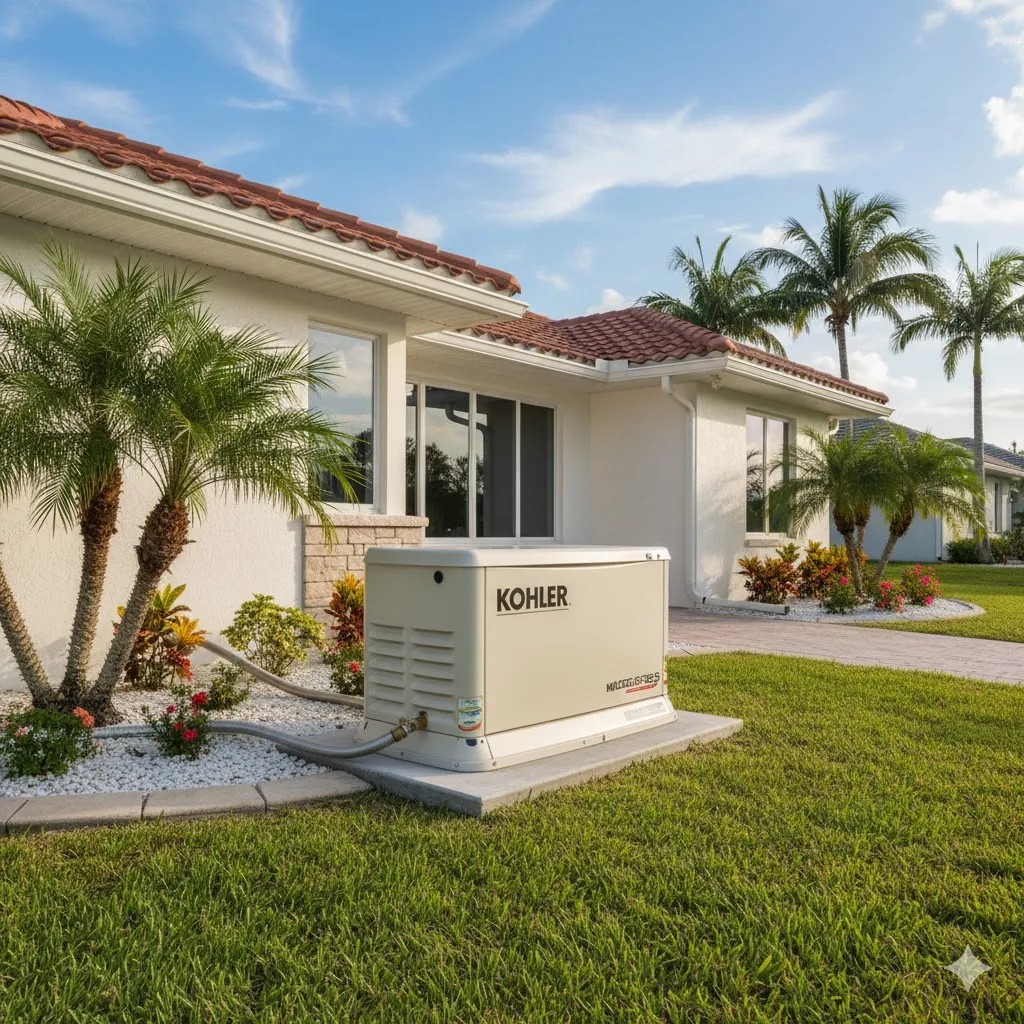
A standby generator protects comfort, safety, and property value across the Gulf Coast.. The right system is sized correctly, installed professionally, and supported by a local service team that understands coastal conditions.